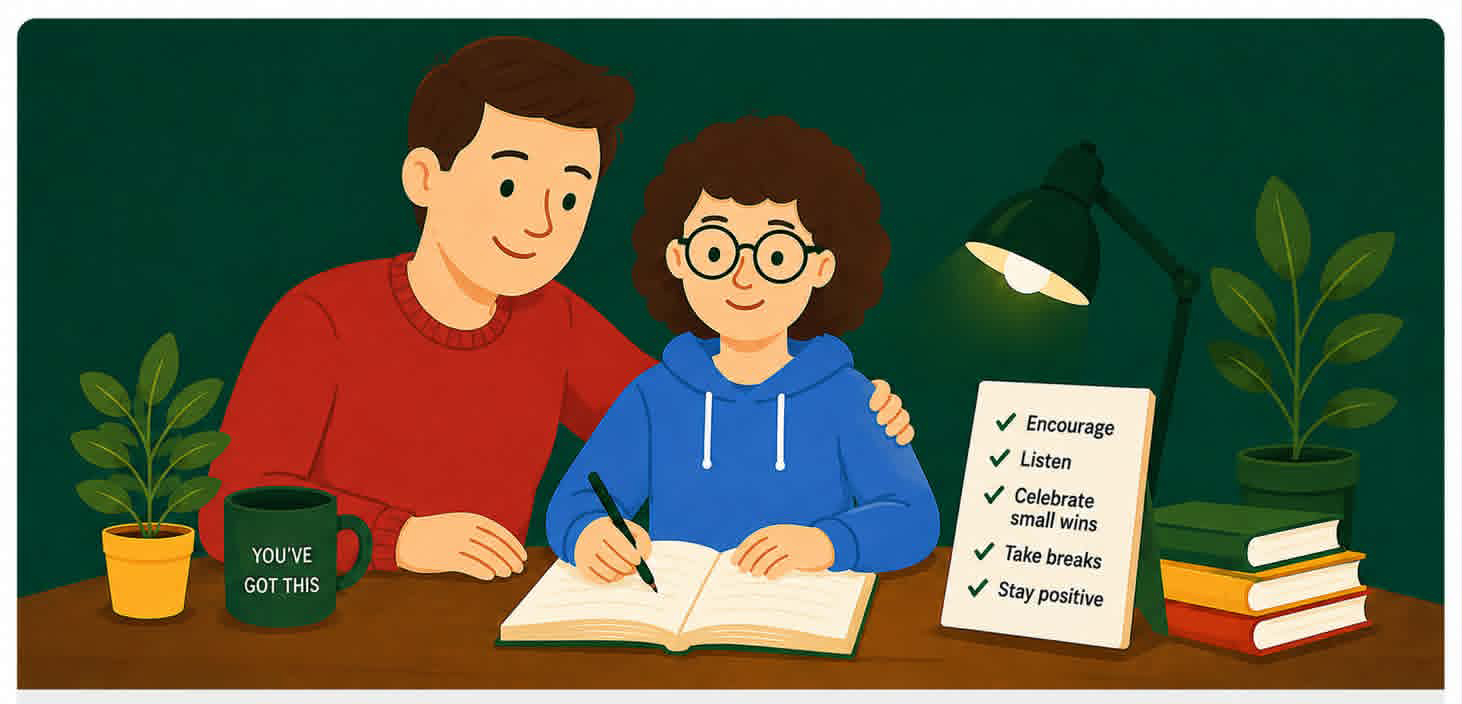
Parents play a big part in how a child experiences the 11+. You do not need to be a teacher to help. Your encouragement, routines and attitude matter as much as any practice paper.
Find out what your area tests
Check which subjects the test covers where you live. Some areas test English and maths, others add verbal and non-verbal reasoning, and a few include a piece of writing. Knowing this early means your child's practice is aimed at the right things.
Little and often
Short, regular sessions beat long, occasional ones. Twenty minutes a few times a week, kept up over months, builds far more than a weekend cram.
Build English through everyday life
Read together, talk about the news, play word games and encourage your child to explain their ideas in full sentences. Vocabulary grows through conversation as much as through books.
Find the maths around you
Shopping, cooking, journey times and pocket money are all chances to practise mental arithmetic, fractions and problem solving without it feeling like work.
Learn from mistakes together
When something goes wrong, ask your child to talk you through their thinking. Treat mistakes as useful information rather than failures.
Teach them to move on
Help your child get comfortable leaving a hard question and coming back to it later. It is one of the most useful habits they can take into the test.
Avoid comparisons
Every child prepares differently. Comparing with siblings, friends or other families at the school gate rarely helps and often adds pressure.
Keep a healthy balance
Make sure there is still time for play, friends, sport and rest. A happy, well rested child learns better and copes better on the day.
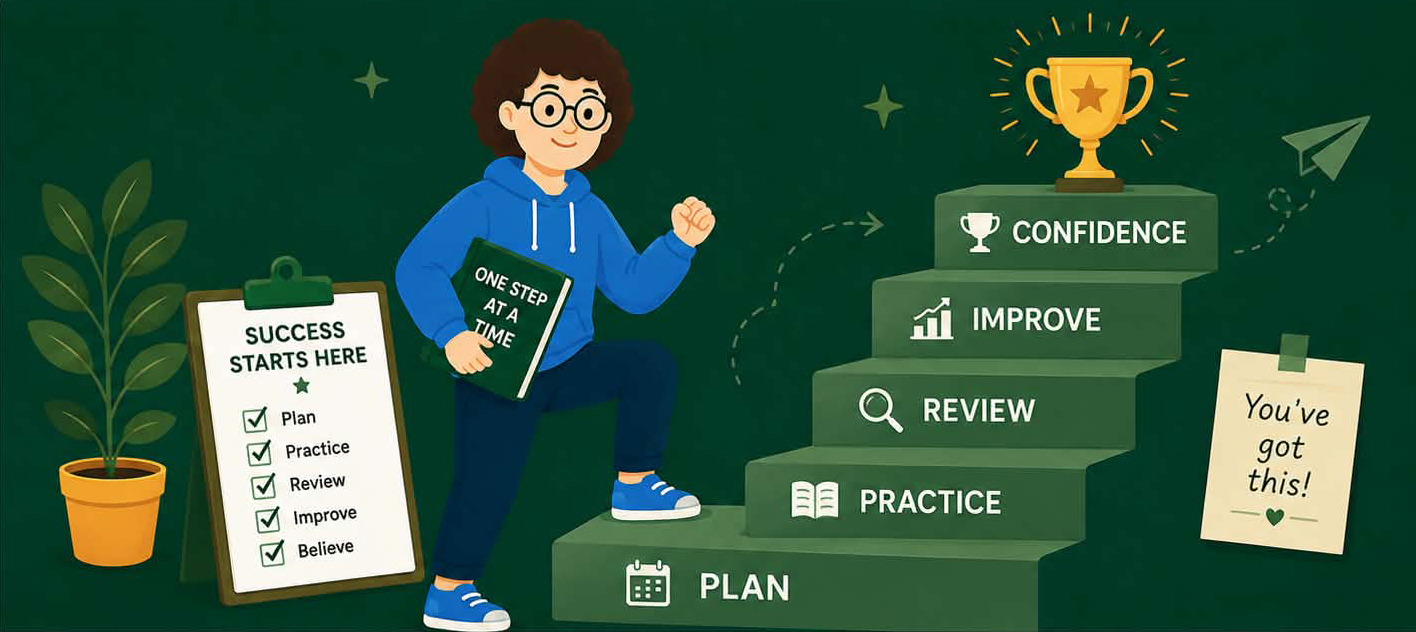
The goal is for your child to walk into the test feeling ready, not perfect. You've got this, and so do they.